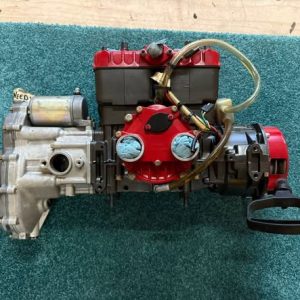
The Rotax 582 “Blue Head” RAVE Engine – Built by Rotax Rick offers aircraft builders, ultralight pilots, experimental-aircraft owners, restorers, and recreational aviation enthusiasts a recognizable two-stroke powerplant for a properly evaluated installation.
Accurate use of Rotax 582 Blue Head, Rotax 582 Blue Head RAVE Engine, and Rotax 582 Aircraft Engine keywords improves visibility without overstating current serviceability.
The Rotax 582 Two-Stroke Engine, Rotax 582 Ultralight Engine, Rotax 582 Aviation Engine, and Rotax 582 65HP Engine phrases represent closely related searches for lightweight aircraft propulsion.
A Rotax Blue Head Engine, Liquid-Cooled Aircraft Engine, Two-Cylinder Aircraft Engine, and Lightweight Aircraft Engine may provide practical value for aircraft requiring compact power and reduced installed weight.
An Experimental Aircraft Engine may also be considered an Ultralight Aircraft Engine or Light Sport Aircraft Engine when the aircraft design, operating rules, weight, power requirements, and installation data support that use.
Why Exact Engine Identification Matters
The seller should provide detailed photographs of the engine from every side, including the data plate, heads, cylinders, carburetors, gearbox, ignition, exhaust ports, and accessories.
The final configuration should remain connected with the exact engine serial number.
Documenting the Engine Build Process
Buyers should request invoices, build sheets, photographs, test results, correspondence, and any maintenance recommendations supplied with the engine.
Terms such as rebuilt, overhauled, refreshed, or built should be used only when the available documentation supports their meaning.
Understanding the Rotax 582 RAVE Engine
Detailed inspection supports responsible evaluation of the Rotax 582 Blue Head RAVE Engine.
RAVE components should move as intended and remain free from severe contamination, damage, leakage, or unauthorized modification.
Understanding Rotax 582 Two-Stroke Power
Fuel quality, oil selection, mixture preparation, and oil-injection configuration should be confirmed for the exact installation.
Fuel and oil procedures should remain clearly documented for every operator.
Understanding the Rotax Cooling System
Leaks, corrosion, hardened hoses, loose clamps, damaged radiators, and trapped air can reduce system effectiveness.
Temperature indications should be verified through reliable instruments rather than estimated through engine sound or appearance.
Maintaining the Rotax Twin-Cylinder Design
The two-cylinder configuration combines a compact engine layout with coordinated crankshaft, piston, cylinder, induction, exhaust, and ignition operation.
Differences between cylinders can indicate ring, piston, cylinder, seal, or measurement concerns that require further evaluation.
Carburetor Synchronization and Mixture
Incorrect synchronization can contribute to uneven operation, vibration, poor response, or cylinder-to-cylinder differences.
A setting that worked on another aircraft may not be suitable for the receiving installation.
Understanding Rotax 582 Ignition Redundancy
A dual-ignition configuration can provide two ignition paths when the installed components and wiring operate correctly.
Spark-plug appearance can provide useful information about combustion, mixture, oil, and cylinder condition when interpreted correctly.
Reduction Gearbox and Propeller Drive
A gearbox should not be selected solely because it bolts to the engine.
The propeller hub, flange, bolts, adapter, and tracking arrangement should match the gearbox and aircraft installation.
Inspecting the Rotax 582 Exhaust
Expansion-chamber geometry, mounting, joints, springs, supports, seals, silencers, and clearances can influence engine behavior and installation reliability.
Professional exhaust installation supports more consistent Rotax 582 Two-Stroke Engine operation.
Lightweight Aircraft Engine Advantages
Accurate weight information supports responsible aircraft planning.
A lighter engine is not automatically suitable if the aircraft requires ballast, structural modification, or a different propeller arrangement.
Ultralight and Experimental Aircraft Applications
Aircraft-specific evaluation supports responsible Ultralight Rotax Aviation Engine Aircraft Engine selection.
The engine should remain accessible for inspection, carburetor service, spark-plug replacement, coolant checks, and gearbox maintenance.
Evaluating the Rotax 582 for Sport Aviation
The buyer should review aircraft limitations, maintenance requirements, operating rules, and installation data before purchase.
Required records should remain complete and accessible to future owners and maintainers.
Evaluating Engine Logbooks
A low-hour statement should be supported by logs, invoices, tachometer records, builder documents, or other credible evidence.
The engine’s reason for removal or sale should be disclosed.
Understanding Ground-Run Limitations
A controlled engine run can provide useful information about starting, idle quality, throttle response, cooling, ignition operation, fuel delivery, vibration, leakage, and unusual noise.
The engine should not be operated without a suitable propeller, dynamometer, or approved load arrangement when loading is required.
Evaluating Cylinders and Seals
Comprehensive mechanical evaluation supports informed purchasing.
The crankshaft, bearings, seals, connecting rods, pistons, rings, and cylinders are central to engine reliability and should receive appropriate attention during a documented build.
Rotax 582 Pre-Purchase Checklist
A detailed review reduces unsuitable purchases and unexpected installation expenses.
- Confirm the complete engine model, serial number, Blue Head and RAVE configuration, builder identity, build date, total time, time since build, crankshaft history, and available records.
- Confirm whether the engine has been broken in, operated in flight, stored after assembly, removed after a fault, or sold as an unflown project engine.
- Require shipping support that protects the crankcase, heads, gearbox, carburetors, ignition, fittings, shafts, wiring, exhaust connections, and identification plate from impact, moisture, and movement.
Safe Handling of the Blue Head Engine
The engine should not shift, tip, or contact the crate during transportation.
Fuel and coolant residues should be managed according to the planned storage procedure.
Installing the Rotax 582 Engine
Professional preparation protects both the engine and aircraft.
The cooling system should be routed and secured to prevent chafing, trapped air, leaks, heat exposure, and contact with moving parts.
After installation, technicians should verify fastener security, engine alignment, propeller tracking, gearbox condition, fuel flow, carburetor synchronization, ignition operation, coolant circulation, instrument accuracy, and absence of leakage.
Preventive Ultralight Engine Maintenance
Small leaks, loose hardware, cracked hoses, deteriorated mounts, abnormal deposits, and unusual noise should be addressed promptly.
The engine should receive additional inspection after propeller damage, sudden stoppage, overheating, severe vibration, fuel contamination, coolant loss, or extended storage.
Rotax 582 Price and Installation Costs
The commercial value of a Rotax 582 depends on exact configuration, serial number, builder records, internal parts, operating hours, gearbox, accessories, test status, storage history, and included documentation.
Buyers should compare complete engine packages rather than bare powerplants alone.
Choosing the Rotax 582 “Blue Head” RAVE Engine – Built by Rotax Rick
For a properly matched aircraft installation, the engine can provide compact aviation power when professionally inspected, installed, operated, and maintained.
The powerplant should not be judged solely through blue heads, clean paint, a 65HP description, builder recognition, or purchase price.
Whether aviation builders are sourcing an Ultralight Aircraft Engine, Rotax Aviation Engine, or Light Sport Aircraft Engine, professional inspection and installation should precede operational use.
With verified identity, documented internal components, suitable mechanical condition, professional installation, organized records, and routine maintenance, the engine can provide dependable long-term value.